Best Glue for Broken Plastic Glasses Frames: What Actually Works?
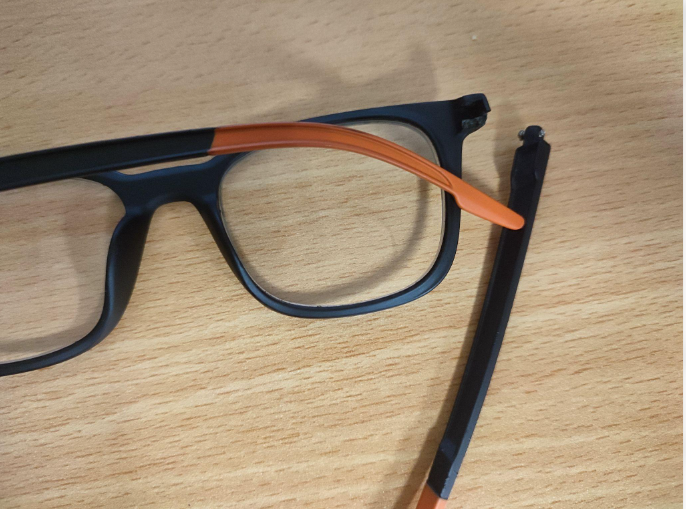
You take off your glasses, give them a quick clean, and suddenly—snap! One arm is hanging by a thread, the bridge has cracked, or your favourite frames have split right down the middle.
Thank you for reading this post, don't forget to subscribe!Congratulations. Your glasses have chosen the worst possible moment to fall apart.
Before you panic, tape them together with half a roll of duct tape, or start shopping for an expensive replacement, take a breath. Some broken plastic glasses frames can be repaired at home with the right adhesive and a little patience.
But here is the catch: not every glue works on every type of glasses frame. The wrong adhesive can create a weak repair, leave a cloudy mess, or damage your lenses.
In this guide, we will explore the best glue for broken plastic glasses frames, compare super glue and epoxy, explain how to repair minor breaks step by step, and show you when it is smarter to visit an optician.
Let’s get those glasses back in action!
What Is the Best Glue for Broken Plastic Glasses Frames?
The best glue depends on the type of plastic, where the frame has broken, and how much stress that part experiences.
For a small, clean break in compatible rigid plastic, a plastic-compatible cyanoacrylate adhesive (super glue) may work. For certain larger, rigid breaks, a suitable two-part epoxy may provide a stronger repair.
However, some spectacle plastics are notoriously difficult to bond. Flexible frames, certain cellulose acetate frames, and materials such as TR-90 may require specialist adhesives or professional repair.
Before buying anything, check the frame material and the adhesive manufacturer’s compatibility instructions.
Here is what to look for in a good glasses frame glue:
- Strong bonding: It should hold the broken pieces together without separating under light everyday handling.
- Material compatibility: The adhesive must be suitable for the specific plastic.
- A neat finish: A clear adhesive may help keep the repair less noticeable, although clear does not always mean invisible.
- Suitable flexibility: The repair should not become a brittle weak point in a frame that needs to flex.
- Manageable curing time: Choose an adhesive you can apply carefully without rushing the alignment.
One more thing: a strong glue joint does not automatically make damaged glasses safe for everyday use. If the repair affects the bridge, lens support, or fit, get the frame professionally assessed.
Top Glue Options for Plastic Glasses Frames
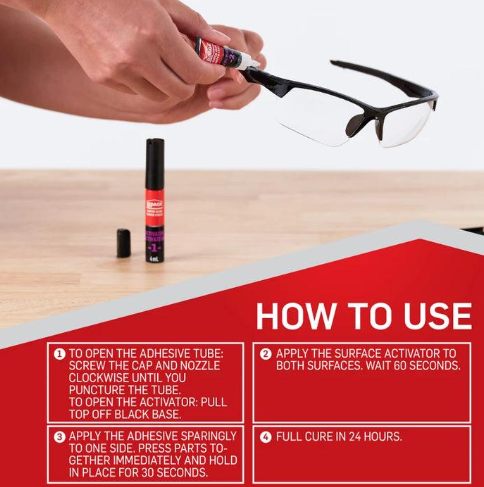
Let’s compare the main options before you spend money on a product that might not work.
1. Super Glue (Cyanoacrylate)
Super glue is popular because it is readily available, easy to apply, and bonds quickly to many compatible materials.
For a small, clean break in a rigid plastic frame, a suitable cyanoacrylate adhesive can be a reasonable temporary repair option.
Best for: Minor breaks in compatible rigid plastics where the pieces fit together neatly.
Advantages:
- Usually easy to find.
- Requires only a small amount.
- Sets quickly, depending on the formulation.
- Some versions dry clear.
Disadvantages:
- Can form a brittle joint that fails when the frame bends.
- May leave a white haze on nearby surfaces.
- Can damage certain lens coatings or finishes.
- Does not bond reliably to every spectacle plastic.
The biggest mistake is assuming that every product labelled “super glue” is suitable for glasses. Check the label, especially if the frame is flexible or its material is unknown.
2. Two-Part Epoxy Glue
Two-part epoxy consists of a resin and a hardener that you mix before applying. Once cured, it can create a durable bond on suitable materials.
It may be useful for certain rigid plastic repairs, particularly when the adhesive is specifically compatible with the frame material.
Best for: Selected rigid-frame breaks where the manufacturer confirms compatibility and the joint can be aligned securely.
Advantages:
- Can provide a strong, durable bond.
- Some formulations fill small gaps.
- Often offers more working time for careful alignment than instant adhesives.
Disadvantages:
- Requires accurate mixing.
- Can leave a visible lump around the repair.
- Needs adequate curing time.
- May not bond well to flexible or difficult-to-bond plastics.
Remember, epoxy is not automatically better than super glue. The right product is the one that works with your frame material and the type of break.
3. Plastic-Specific Adhesives
Some plastics need specialist bonding products or surface preparation. A plastic-specific adhesive may be a better choice when an ordinary super glue or epoxy is unsuitable.
However, certain plastic-bonding products use aggressive solvents or chemical primers that can damage spectacle frames, lenses, or coatings.
Best for: Frames whose material has been identified and whose manufacturer or adhesive supplier confirms compatibility.
If you cannot identify the plastic, do not experiment with harsh solvents on your favourite frames. An optician or eyewear repair specialist may be able to identify a suitable repair method.
Super Glue vs. Epoxy: Which Is Better for Glasses?
Here is a quick comparison to help you decide.
| Feature | Super glue | Two-part epoxy |
|---|---|---|
| Application | Usually simple | Requires mixing |
| Initial setting | Often very fast | Often slower |
| Working time | Limited | Usually longer |
| Gap filling | Generally poor | Some types fill small gaps |
| Flexibility | Often brittle | Depends on formulation |
| Finish | Can be neat but may haze | May leave a visible joint |
| Best use | Small, compatible breaks | Selected compatible rigid repairs |
Our verdict: For a tiny, clean break in a compatible rigid frame, plastic-safe super glue may be the more convenient option. For a suitable rigid joint that needs a gap-filling adhesive, compatible epoxy may be worth considering.
Neither is a universal fix. If the frame is flexible, the hinge has broken, or the bridge supports the lenses, professional repair is usually the safer choice.
How to Fix Broken Plastic Glasses Frames With Glue
Found an adhesive that is compatible with your frames? Before opening the tube, prepare your workspace. A little care now can save you from turning a simple repair into a sticky disaster.
Step 1: Inspect the Damage
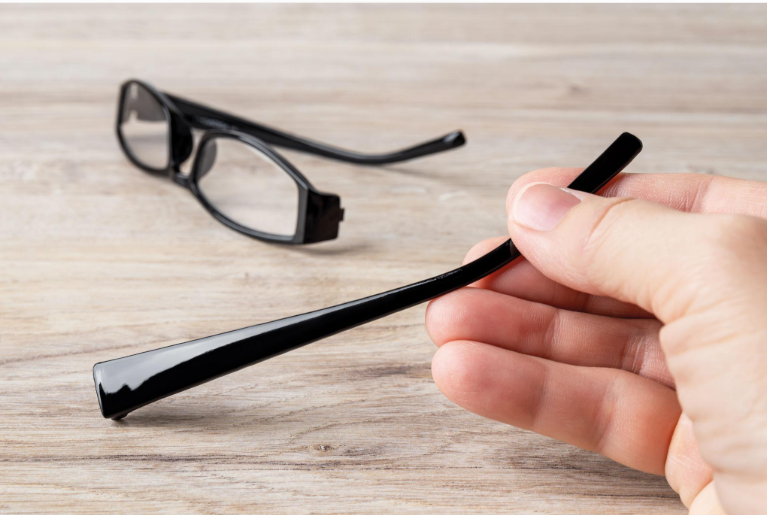
Start by checking exactly where the frame has broken.
Is it a clean break in a rigid section? Has an arm snapped near the hinge? Is the bridge cracked? Are the lens rims damaged?
If the pieces fit together neatly and the frame material is compatible with your adhesive, a minor repair may be possible.
If the break affects a hinge, lens support, or the bridge, avoid relying on glue for everyday wear. These areas experience stress, and failure could damage the glasses or cause injury.
Step 2: Clean and Dry the Broken Pieces
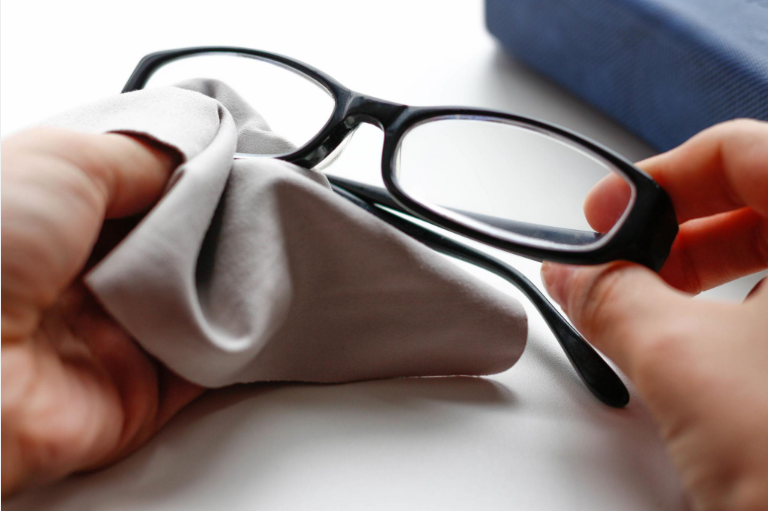
Remove dirt and oils from the broken surfaces using a method safe for the frame material. A clean, dry, lint-free cloth is a good starting point.
Allow the surfaces to dry completely before applying adhesive.
Avoid acetone, alcohol, or other solvents unless the frame manufacturer confirms they are safe. Some chemicals can damage plastic, finishes, or lens coatings.
And please, do not try to clean the break with your shirt while eating a sandwich. You want clean surfaces, not crumbs permanently incorporated into your repair.
Step 3: Protect the Lenses and Prepare the Adhesive
Read the adhesive instructions before opening the package. Work in a well-ventilated area, protect your work surface, and keep the glue away from your eyes and skin.
If possible, position the frame so that adhesive cannot run toward the lenses.
Do not apply glue to the lenses or their coatings. Cyanoacrylate fumes can cause white haze on nearby surfaces, and some adhesives can damage lens coatings.
If you cannot protect the lenses properly, stop and seek professional help.
Step 4: Apply a Small Amount of Glue
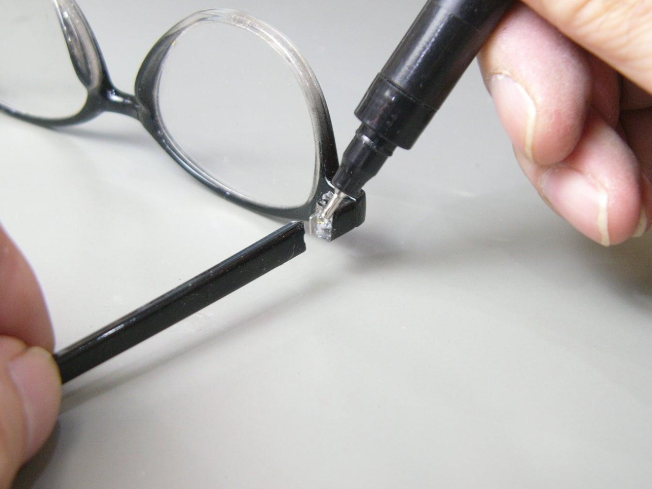
For a compatible repair, use only the amount recommended by the manufacturer. More glue does not mean a stronger repair; it often means a bigger mess.
Carefully apply the adhesive to the intended bonding surface, avoiding hinges, screws, lenses, and moving parts.
With instant adhesives, you may have very little time to correct the alignment. With epoxy, follow the specified mixing ratio and working time.
Do not mix different adhesives together in the hope of creating a super-strong formula.
Step 5: Align the Broken Pieces
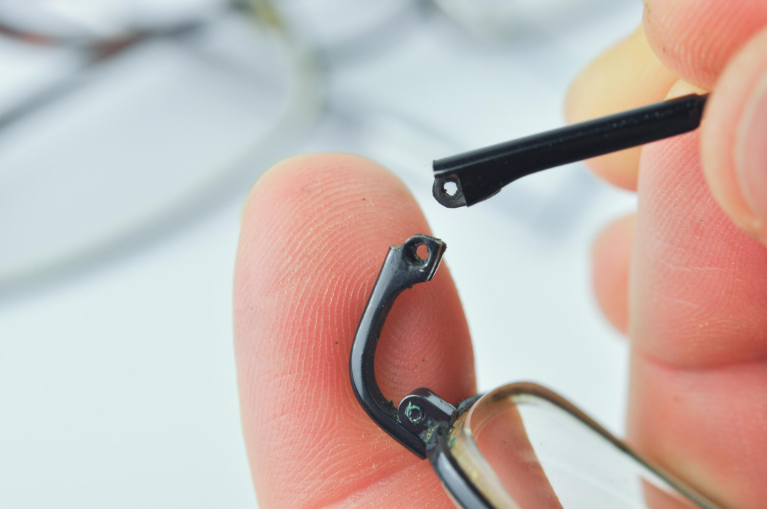
Bring the two pieces together gently and align them as accurately as possible.
Hold them in position according to the adhesive instructions. If the manufacturer permits it, a suitable small clamp or tape may help keep the parts aligned.
Do not squeeze so hard that adhesive spreads onto the lenses or surrounding surfaces.
Check the alignment before the adhesive sets. A frame that cures crooked may sit unevenly on your face, even if the joint holds.
Step 6: Let the Glue Cure Completely
This is the step impatient people love to skip.
Some adhesives set within seconds, but their full cure can take much longer. Follow the manufacturer’s stated curing time before handling or testing the repair.
Keep the glasses stationary while the adhesive cures. Avoid bending the repaired section to see whether it is strong. That is rather like testing a cake by dropping it on the floor.
Once cured, inspect the repair without forcing the frame. If the joint moves, looks unstable, or affects the fit, do not wear the glasses until they have been assessed.
Common Mistakes to Avoid When Using Glasses Repair Glue
A successful repair is as much about what you avoid as what you do.
Using too much glue: Excess adhesive can spread onto lenses and finishes, create a bulky joint, and make the repair look untidy.
Choosing glue without checking the plastic: Some spectacle materials are difficult to bond. A product that works beautifully on one plastic may fail on another.
Rushing the cure: A surface that feels dry may not have reached full strength.
Forcing the frame: Bending the repaired section immediately can cause the joint to fail.
Ignoring lens damage: If the lens is loose, cracked, or no longer securely supported, do not assume the frame is safe simply because the broken plastic has been glued.
Using household solvents carelessly: Acetone and other aggressive chemicals can damage plastic frames and lens coatings.
The golden rule is simple: follow the adhesive instructions, protect your lenses, and do not gamble with a repair that affects how safely your glasses fit.
When Should You Replace or Professionally Repair Your Glasses?
DIY repairs are not always the best answer. Sometimes, the smartest fix is handing the glasses to someone who repairs them professionally.
Visit an optician or eyewear repair specialist if:
- The bridge is broken or badly cracked.
- The hinge, screw mount, or arm attachment has failed.
- The lens rim no longer holds the lens securely.
- The frame is flexible or made from an unidentified plastic.
- The lenses are cracked, scratched, loose, or damaged.
- The repair changes how the glasses sit on your face.
- The frame repeatedly breaks at the same point.
A professional may be able to replace a screw, repair a hinge, fit a replacement temple, or recommend replacing the frame.
If your prescription lenses are still in good condition, ask whether they can be transferred to a compatible replacement frame. That may be more economical than replacing the entire pair.
And if your glasses are essential for driving, working, or seeing clearly, arrange a safe alternative rather than relying on a questionable repair.
Frequently Asked Questions About Glue for Eyeglasses Frames
Can I use super glue on plastic glasses frames?
Sometimes. Super glue may work on a small break in compatible rigid plastic, but some spectacle materials are difficult to bond, and the adhesive may create a brittle joint. Always check material compatibility and protect the lenses.
Is epoxy glue better than super glue for glasses?
Not necessarily. Epoxy may be useful for certain rigid repairs, while super glue may be more convenient for small, clean breaks. The frame material, joint design, and adhesive formulation matter more than the name on the bottle.
How long does glasses repair glue take to dry?
It depends on the adhesive. Some super glues set quickly, while epoxy may require hours to cure fully. Follow the package instructions and distinguish initial setting time from full curing time.
Can I glue a broken glasses arm?
A small break in a compatible rigid section may be repairable, but an arm near the hinge experiences repeated movement and stress. A replacement arm or professional repair is generally more reliable.
Can I remove dried glue from eyeglass lenses?
Be careful. Scraping or using solvents can permanently damage lens coatings. Avoid acetone unless the lens manufacturer explicitly confirms it is safe. Ask an optician about removing adhesive without damaging the lenses.
Is it safe to wear glasses after gluing them?
Only if the repair is stable and does not affect the lenses, fit, or structural safety of the frame. A glued joint can fail unexpectedly, so do not rely on a DIY repair for a damaged bridge, hinge, or lens-supporting section.
Final Thoughts: Save Your Glasses Without Making a Sticky Situation
Finding the best glue for broken plastic glasses frames is about more than grabbing the strongest adhesive on the shelf. You need a product that is compatible with your frame, suitable for the type of break, and safe to use around your lenses.
For minor breaks in compatible rigid plastics, a suitable super glue may be enough. For selected rigid joints, a compatible two-part epoxy may be an option. For broken hinges, bridges, flexible frames, or damaged lens supports, professional repair is usually the better route.
Take your time, use a small amount of adhesive, follow the instructions, and let the repair cure completely.
Your glasses might deserve a second chance—but your eyesight deserves a little extra caution.
Have you ever repaired a broken pair of glasses? Share what worked for you, and help someone else avoid a sticky situation!