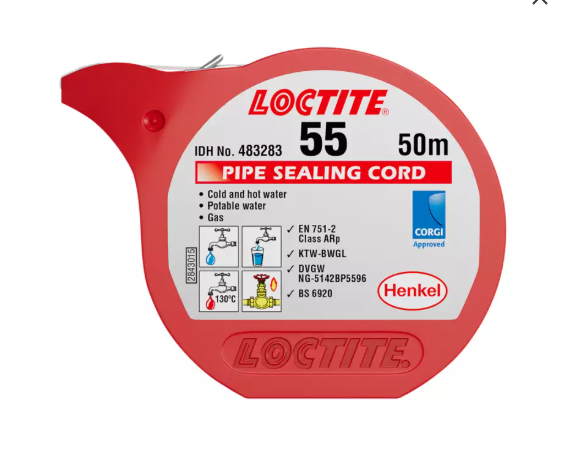
LOCTITE 55 Pipe Sealing Cord: Uses, Application, Temperature Range and How to Stop Pipe Leaks
A leaking pipe connection can turn a perfectly good plumbing job into an afternoon of frustration. You tighten the fitting, wipe away the water, congratulate yourself, and then notice another tiny drop forming.
Not exactly the result you wanted!
If you are working with threaded metal or plastic pipes, LOCTITE 55 pipe sealing cord offers a practical way to create a reliable seal without waiting for adhesive to cure.
Unlike conventional liquid thread sealants, LOCTITE 55 is a non-hardening sealing cord. It fills the gaps between threaded connections and provides an immediate seal when the joint is assembled. That makes it particularly useful when you need to complete plumbing work without unnecessary delays.
But is it suitable for drinking water? Can you use it on gas pipes? And how do you apply it without wasting the cord?
Let’s get into the details.
What Is LOCTITE 55 Used For?
LOCTITE 55 is a white, coated multifilament sealing cord developed for threaded pipe connections. It is suitable for sealing metal and plastic pipes and fittings.
Its main job is simple: prevent liquids and gases from escaping through the small spaces between mating pipe threads.
Common applications include:
- Water plumbing: Sealing threaded connections in domestic and industrial water installations.
- Gas installations: Sealing compatible threaded connections in natural gas systems.
- Industrial pipework: Helping prevent leakage in suitable fluid and gas distribution systems.
- Plastic pipe fittings: Providing thread sealing where the pipe and fitting materials are compatible.
One advantage worth mentioning is that the cord does not harden after application. You can also make small adjustments to the assembled fitting when alignment is necessary.
That is particularly useful when positioning elbows, connectors and other plumbing components.
How to Apply LOCTITE 55 Pipe Sealing Cord Correctly
Getting a dependable seal is not simply about wrapping as much cord as possible around a pipe. Too little may leave gaps, while excessive material can make assembly difficult.
Follow these steps:
- Prepare the threads: Clean the male pipe threads using a wire brush. If the threads are exceptionally smooth, lightly roughen them.
- Position the cord: Hold its end against the male thread, approximately two threads back from the pipe end.
- Wrap in the correct direction: Wind the cord in the same direction as the thread helix, using a criss-cross pattern. Fill the thread grooves without completely covering the thread profile.
- Cut and secure: Use the dispenser’s built-in cutter and press the loose end against the threads.
- Assemble the connection: Screw the fitting into place using the appropriate tools. Make sure the joint is properly tightened.
An important tip: Follow the recommended number of wraps printed on your product packaging. Pipe diameter and material influence how much cord you need.
Does LOCTITE 55 Need Time to Cure?
No. This is one of its biggest advantages.
LOCTITE 55 is a non-curing thread sealant. It creates an immediate seal when the threaded connection is assembled, eliminating the waiting period associated with curing sealants.
You can also reposition the tightened fitting by up to 45° when alignment is necessary, without compromising the seal when correctly applied.
Is LOCTITE 55 Suitable for Water and Gas Pipes?
Yes. LOCTITE 55 is designed for compatible threaded metal and plastic pipe connections.
Its approvals include:
- DVGW/KTW for gas and potable water applications.
- NSF/ANSI Standard 61 for drinking-water system applications.
- WRAS listing and BS 6920 compliance for potable water.
- EN 751-2 Class ARp testing.
- KIWA GASTEC QA AR 214 certification for hydrogen-containing gas systems, with certification availability depending on country.
Temperature Resistance and Product Specifications
| Property | Specification |
|---|---|
| Colour | White |
| Product type | Non-curing sealing cord |
| Application | Thread sealing |
| Compatible materials | Metal and plastic |
| Operating temperature | -20°C to 150°C |
| Cure time | No curing required |
| Adjustment | Up to 45° |
Why Choose LOCTITE 55 Instead of Ordinary PTFE Tape?
Both products are used to seal threaded pipe connections, but LOCTITE 55 offers some practical advantages:
- Its cord construction makes application easier to control.
- It does not require curing before the connection can be used.
- Fittings can be adjusted after tightening.
- It works on compatible metal and plastic threaded connections.
- Its dispenser makes storage and application convenient.
For plumbers handling multiple connections, saving installation time can make a noticeable difference.
One safety consideration: Do not use LOCTITE 55 for pure oxygen, oxygen-rich systems or chlorine. Gas installations should be handled by qualified professionals, with the applicable local regulations and product approvals checked before installation.
Final Verdict: Is LOCTITE 55 Worth Using?
If you want a convenient pipe sealant that works without curing delays, LOCTITE 55 deserves consideration. Its combination of immediate sealing, adjustability and approvals for specified gas and potable-water applications makes it a useful option for professional plumbing and industrial maintenance.
The secret, however, is correct application. Clean the threads, use the recommended amount and assemble the fitting properly. A good seal starts before you even pick up the pipe wrench!
Looking for a reliable thread sealant for your next plumbing or maintenance project? Consider LOCTITE 55 and check its technical specifications against your application before purchasing.

hae